28 Oct 2011

X Rated X Factor


Madonna on tour in 1987
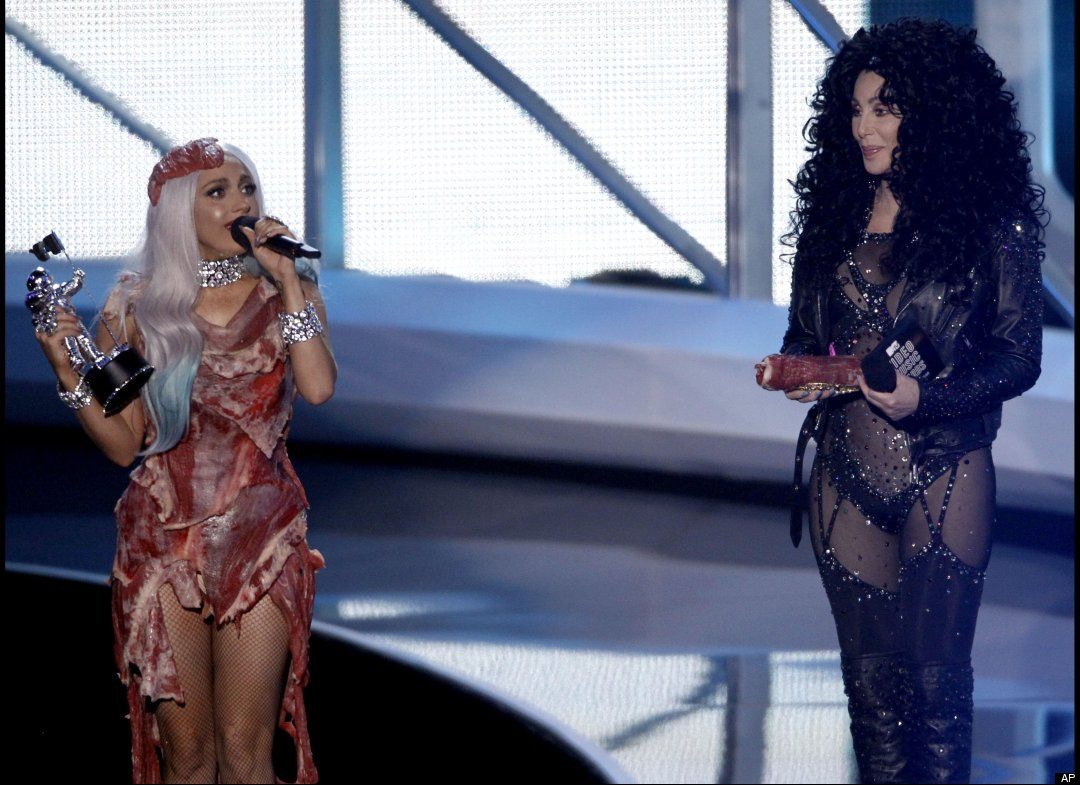
Cher and Lady Gaga in their most notorious outfits at the 2010 MTV Awards
Oscar Wilde, Irish poet, author and playwright, once remarked – The only thing worse than being talked about is not being talked about.  

The entertainment industry is an industry like any other, and thus the pressure is on celebrities to be more shocking, more outrageous, in order to increase ‘product awareness’ in the market.   

As Jenny notes in her post, Applying critical interpretations to Reality TV, marketers are taking advantage of the widespread appeal of ‘reality TV’ and adopting new ploys to reach a wider audience.The growing phenomenon of cross-promotional appearances has resulted in ‘reality TV’ shows, classified for family viewing, increasingly featuring scantily clad music artists gyrating suggestively, eagerly watched by a young and impressionable audience.  Inevitably, complaints ensue.  There is ‘public outrage’.  TV and music producers depend on it.  

One of the unfortunate side effects of ‘moral panics’ is that they frequently tend to ensure that ‘offensive’ material reaches an even larger audience, as this recent article in British newspaper The Daily Mail, demonstrates.  The article purports to be a serious news story about stricter broadcasting guidelines being implemented in Britain, following a large number of complaints about the ‘inappropriate’ costumes and choreography of guest performers on the X Factor’s final show of the season, aired in December 2010.  

However, as Brendan Behan, paraphrasing Wilde, succinctly states – There is no such thing as bad publicity.  The article manages to simultaneously adopt a tone of moral outrage while gratuitously including multiple “graphic” images of the offending performances, thereby providing the artists with the kind of coverage publicists dream about.  

While Thompson (2010, p397) argues that “sexualised behaviour is generally considered appropriate for adults (assuming it is expressed in socially acceptable ways)”, I question whether the sexualised behaviour exhibited in popular media would be considered ‘socially acceptable’ if displayed in other contexts or by adults other than celebrities.  


Images 
Cher and Lady Gaga. Retrieved from 

Madonna. Retrieved from  


References
Thomas, L. (2011) At last... Rihanna and Co told 'you'll have to cover up if you want to appear on X Factor', as Ofcom cracks down on the sexualisation of children. The Daily Mail. 1st October 2011. Retrieved from http://www.dailymail.co.uk/tvshowbiz/article-2043762/X-Factor-Acts-like-Rihanna-Christina-Aguilera-told-cover-Ofcom.html

Kirrilly Thompson (2010): Because looks can be deceiving: media alarm and the
sexualisation of childhood – do we know what we mean?, Journal of Gender Studies, 19:4, 395-400. http://dx.doi.org/10.1080/09589236.2010.533492


24 Oct 2011

Becoming an agent for change

While the introduction of new participatory culture technologies have been welcomed by many educators, they have also been a cause for concern for some educational authorities (Todd, 2008).  The risk of cyberbullying, issues of online safety, the unethical intellectual property practices of young people and the perceived  “frivolity [of] social networking” have all been cited as reasons to exclude new participatory culture technologies from the school environment  (Vasudevan, 2010, p44).  These are certainly genuine and justifiable concerns.  Stories of young people falling victim to new online ‘scams’, being targeted by bullies or engaging in ‘hacking’ and other illegal activities online, are rife in the news.  Surely then, that is even greater reason to bring these new technologies into the school context, in order to teach young people safe and responsible ways to use new media technologies.  The ‘ostrich mentality’ of burying your head in the sand and waiting for it all to go away, isn’t working.

 
Ostrich mentality


 It is also important to note that corporations are harnessing the power of new media technologies to increase efficiency and productivity in the workplace.  If our goal, as educators, is to prepare young people for life beyond school, then we have a responsibility to, first of all, learn how new technologies are being utilised in the broader social context, and then, to teach our students how to use them for purposes other than leisure or entertainment. 


However, it can be difficult to introduce the use of new technologies into the school context, particularly if educational policymakers do not recognise the educational potential of these tools.  Co-editor of the Teacher Librarian journal and part-time faculty member of the Information School at the University of Washington, Elizabeth ‘Betty’ Marcoux acknowledges the difficulties (2011a, p70).  However, she stresses that the key to introducing new technologies lies in effectively demonstrating how these tools will benefit teachers, both in planning and delivery of the curriculum, and in improvements in student engagement and learning outcomes (2011b, p66).  

One of the best ways to show how technology can be used effectively to support teaching and learning is to lead by example.  Dr Ross Todd  Associate Professor in Rutgers University’s  Department of Library & Information Science and Director of the Center for International Scholarship in School Libraries (CISS)  advocates that teacher librarians should ‘get their hands dirty’; experimenting and playing with new technologies is the best way to learn what they can do and how they can be used for educational purposes (2008, p30). Although this may seem an overwhelming task, given the plethora of Web 2.0 tools available, the good news is, thanks to the capabilities of new communication technologies, there is no need to tackle it alone.  Educators all over the world are sharing their ideas on how to use new technologies to help students learn more effectively through blogs, wikis, online forums and e-groups.  

One of the most effective and time efficient ways to connect with these ideas is to utilise the power of Web 2.0 tools to bring information directly to you, rather than going and actively searching.  One of the tools I have found very useful is Diigo. Originally a ‘bookmarking’ tool to assist browsers to revisit favourite websites, it has developed into a collaborative community of users.  Using Diigo, I have been able to find groups providing useful and practical information for educators, and I receive email notifications whenever new information is posted.  From just one Diigo group, I have already collected a wealth of information on topics such as cyberbullying and copyright, as well as tools and resources for use in classrooms.

When I commence working in a school context, I plan to draw on this information to provide professional development to teachers on the use of new technologies.  However, Marcoux (2011a, p66) points out it is important to be seen as “the technologist ... not the technician”.  It is equally important therefore, that I lead by example, and utilise new technologies in my own practice.  While I will doubtless come up with new ideas of my own when I am in the role, I have been able to gather some very useful ideas already.

Earlier this year, I was fortunate enough to attend a teacher librarian seminar presented by the dynamic and inspirational Dr Joyce Valenza, teacher librarian at Springfield Township High School in Philadelphia, member of the Teacher Librarian Ning and author of the neverendingsearch, the School Library Journal blog.  
with Dr Joyce Valenza at the Information Landscapes for 21C Learners Seminar July 2011


Dr Valenza shared with the audience some of the methods she uses to encourage teachers to use new technologies.  She admitted that not all teachers are initially open to the idea, but rather than wait for them to invite her to collaborate, Dr Valenza sometimes indulges in a little ‘positive subversion’; collating information and resources for the teacher.  Dr Valenza confided that once teachers experience the benefits of collaboration, and see the improvements in student learning, they are usually more receptive to the idea. 

However, she doesn’t just confine her use of technology to supporting teaching and learning through providing resources.  She also actively engages students in using technology for real world purposes. 


The video above is an example of a project her students created – the library’s annual report; a highly effective way to showcase students’ creativity and demonstrate to school administrators the educational possibilities of new technologies.

I am looking forward to the challenge of being an agent for change; instrumental in introducing and implementing new ways to use emerging technologies to enhance teaching and maximise student learning. 


Images
Ostrich mentality by tropicalpete.  http://www.flickr.com/photos/12023825@N04/2898021822/

Video - Springfield School Library Annual report 2010 - 2011.
References
Marcoux, E. (2011a) Encourage Buy-in Using Technology for Learning. Teacher Librarian; Apr 2011; 38, 4; pg. 69-70.  http://www.teacherlibrarian.com/

Marcoux, E. (2011b) Technology and YOU. Teacher Librarian; Jun 2011; 38, 5; pg. 66. http://www.teacherlibrarian.com/

Todd, R. J. (2008). Youth and their Virtual Networked Words: Research Findings and Implications for School Libraries. School Libraries Worldwide , 14 (2), 1934. http://www.iasl-online.org/pubs/slw/

Vasudevan, L. (2010) Literacies in a Participatory, Multimodal World: The Arts and Aesthetics of Web 2.0  Language Arts . Vol. 88. No. 1. September 2010. http://www.ncte.org/journals/la

Good Looking


November 18. Breaking Dawn Part 1. Forever is only the Beginning. If this means nothing to you, you have managed to escape the whirlwind of marketing and popularity surrounding the Twilight film series. I just saw the trailer at my gym for the first time and some of the diversity of people present around the room had stopped working out to watch. Others sniggered. For major Twilight fans, or "Twi-hards" (see my other blogpost), this is a big deal. For educators, Edwards suggests it is an opportunity to use an item of massively popular culture to unpack the many complicated issues the films set up around gender and power relations especially as they relate to looking and the gaze (2009).
In the article, Good Looks and Sex Symbols: The Power of the Gaze and The Displacement of the Erotic in Twilight, Edwards sees the Twilight films as a context to talk about how youth negotiate and become aware of looking and being looked at and how this is represented in the fictional reality of Twilight. Edwards plays on several meanings of the word “look”, also mentioning the importance of taking on a certain “look” with regards to experimentation with constructing an identity and forming and belonging to social groups which are rigidly defined in the films (2009). Twilight fans adopt these looks in costume play performance and in the construction of their online identities.
The Twilight films and books draw upon many traditions of the gothic romance, for example the tension between desire and repulsion in the construction of it’s main characters, a late teenage girl named Bella and a vampire named Edward (Seltzer, 2008). However, Twilight recasts the vampire as “vampire-lite", an attractive boy, more mature than his looks, who wants to protect his girlfriend rather than a predator / prey relationship (Schiavo, 2008). In the films, for the most part
The female lead, Bella on the other hand, is constantly portrayed as relying on men, first her father, then Edward, then in Edward’s absence, upon a third character, Jacob, before returning to Edward again. She is at once victim and vulnerable in the space of high school and desiring, wanting to attain Edward (Seltzer, 2008).
Watching the film is an opportunity to deconstruct the director’s intention of our view into the world as we shift perspectives from characters along with their shifting passive and active roles of desire / objectification / prey. Edwards suggests this both as an opportunity to talk about a feminist understanding of the idea of the objectifying masculine gaze and the possibility it may shift as Bella takes an active role (2009). In the first film, for example, Bella is set on becoming a vampire to be with Edward. The film ends with Edward passively reclining in the grass with Bella looking down over him wanting to become vampire, having carved a space for herself saying “it’s my world too” (Godfrey, 2008).
The films and books have come under criticism from feminists for making a romantic fantasy out of a young girl drawn into a violent and controlling relationship with a much older man. (Housel, 2009). It has also been attacked for encoding a message of abstinence from sex. Both Edward and Bella long for intimacy but the male lead (vampire) keeps in check his dangerous sexual appetite in order to protect the fragile female (Seltzer, 2008). When they finally do have (post-marital) sex in the fourth film, Edward seriously injures Bella and gets her pregnant (Godfrey & Meyer, 2011). Housel suggests the series give many bad messages about gender and relationships to Twilight’s young female fans (2009).
Fans have responded to the controversy by forming their own answers to the questions raised by the films. In an example of participatory culture, the Twilight fan site, Bella and Edward, empowered its members to contribute to the publication of a book, “Bella Should Have Dumped Edward”, a compilation of their varied views to 31 questions.  These ranged from analysing whether Bella is strong or a “blank canvas” relying on Edward to whether the relationships between Bella and Edward and Jacob are controlling as suggested above or healthy (Pan, 2010).
In terms of popular culture, the Twilight films series can also be contrasted with the contemporary television series, “True Blood” (Ball, 2008). True Blood also addresses themes of gender, sexuality and relationships in a supernatural vampire world. It’s encoded messages about sexuality are against homophobia, with vampires coming out of the closet and fights with religious organisations who graffiti “God Hates Fangs” (Tyree, 2009). The female lead in True Blood, Sookie, played by Anna Paquin is also a non-vampire in love with a male vampire. Also, like Twilight, the vampire, Bill, positions himself to protect her but she can clearly protect herself and in the first episode it is she who saves him. Later, when she is being attacked, his vampire qualities prevent him from protecting her (Ball, 2008). Another example of a strong female lead is the Buffy the Vampire Slayer film and television series which plays with the genre of predator and prey in gothic fiction (Whedon, 1992).
References
Ball, A. (Creator). (2008). True Blood [Television Series]. USA: HBO.
Godfrey, W. & Meyer, S. (Producer), & Condon, B. (Director). (2011). The Twilight Saga: Breaking Dawn - Part 1 [Motion picture]. USA: Summit Entertainment.
Godfrey, W. (Producer), & Hardwicke, C. (Director). (2008). Twilight [Motion picture]. USA: Summit Entertainment.
Housel, R. (2009). The Real Danger: Fact vs Fiction for Girls. In Irwin, W., Housel, R. & Wisnewski, J. (Eds.) Twilight and Philosophy: Vampires, Vegetarians, and the Pursuit of Immortality. ISBN 0470554126.
Pan, M. (2010). Bella Should Have Dumped Edward. Berkely, CA: Ulysses Press
Seltzer, S, (2008). "Twilight": Sexual Longing in an Abstinence-Only World. Retrieved from http://www.huffingtonpost.com/sarah-seltzer/twilight-sexual-longing-i_b_117927.html
Schiavo, I. (2008, November 25). ‘Twilight’: Vampire lite, The Weekender. Retrieved from http://www.theweekender.com/
Tyree, J.M. (2009) Warm-Blooded: True Blood and Let the Right One In Film Quarterly Vol. 63, No. 2 (Winter 2009), pp. 31-37
Whedon, J. (Writer) & Kuzui, F. (Director). (1992) Buffy the Vampire Slayer [Motion Picture]. USA: Twentieth Century Fox Film Corporation.

23 Oct 2011

Unhealthy effects of children's viewing in Prime Time television

In the last few years, reality TV has shifted from some slightly stale neglected formats (Survivor 13 and Big Brother Season 57) to being the fresh and respectable centre of the Australian television landscape in shows such as Master Chef, Junior Master Chef and the Celebrity Apprentice (The Sydney Morning Herald, 2011). However, bringing child relevant programming into prime time viewing has had an unwanted consequence in keeping children awake later during school nights according to Sarah Blunden from the University of South Australia's Centre for Sleep Research (cited in Browne, 2011).


Child falling asleep eating
Creative Commons Photo by Lance Nishihira
In the article, Late programs keeping kids from a decent snooze, Blunden suggests that the thirty minutes or more of sleep lost per night to view these television shows can have a detrimental effect on a child's ability to perform well in class (cited in Browne, 2011). Blunden cautions that long term sleep deprivation in children can encourage aggressive behaviour and problems concentrating as well as discourage physical activity such as sport (cited in Browne, 2011). This negative effect contrasts with the many positive messages portrayed by Junior Master Chef about healthy eating, creativity and cultural awareness which gave it such popular and critical acclaim (Hardy, 2011).

As with the familiar messages given about healthy eating; education and moderation are the key take-home ideas from this article. Parents should be making sure that their primary school aged children's sleeping patterns are not too disrupted in becoming viewers of these television shows. The television shows also offer "catch up television" viewing options via their web sites, allowing more children friendly viewing times which parents could provide as alternatives.

References

Browne, R. (2011, October 23). Late programs keeping kids from a decent snooze, The Sydney Morning Herald, Retrieved from http://www.smh.com.au/

Hardy, C. (2011, October 5). Canberra's young chef, The Canberra Times, Retrieved from http://www.canberratimes.com.au/


The Sydney Morning Herald. (2011, October 23). Stars line up for a reality cheque, The Sydney Morning Herald, Retrieved from http://www.smh.com.au/

The myth of innocence

In an earlier post, I presented a YouTube clip of very young girls performing a dance routine based on the Beyonce hit music video, Single Ladies. Thinking back on my observations, I wondered why I found the clip so disturbing.  A number of recent articles – The innocence fetish (Faulkner, 2010), Too much? too young?  (Lumby and Albury, 2010) and Troubling childhood innocence (Taylor, 2010) – provided me with some insight. 

One of the key points made by Faulkner (2010, p107) is that perceptions of children as sexual beings are determined by the adult gaze.  In other words, sexualisation is a result of viewer interpretation. It seems that not only beauty is in the eye of the beholder, so too is desire.  As Lumby and Albury (2010, p145)  point out, paedophiles can construe a “sexual invitation” in an image of a child regardless of what they are wearing. However, they state that most “reasonable adults [do not view] images of children” in this way (Lumby et. al., 2010, p145).

Yet Taylor (2010, p51) claims that many adults now are doing just that.  Attempts by well-meaning adults to protect children from the potential danger of unwanted sexual attention have created an atmosphere in which all images of children are evaluated from a paedophilic perspective (Taylor, 2010, p51).  Clearly, my own reaction to the YouTube clip has been influenced by the latest ‘moral panic’ concerning the loss of childhood innocence.  

While it may be true that childhood innocence is a social construct (Faulkner, 2010; Lumby et. al., 2010; Taylor, 2010), it is equally true that the moral codes that operate within society are also culturally constructed, and as such, they are subject to change over time; what was once unthinkable, becomes unmentionable, and is ultimately considered unavoidable.


Movie poster for the Baby Burlesks

Few would have considered the images presented by Shirley Temple and her cohort in the Baby Burlesks films to be sexually provocative; they were seen as harmless fun – cute kids playing ‘dress up’.   


Child star -Shirley Temple
 

Although hugely popular in the 1930s, it is unlikely in the current climate that they would even be made at all. 


Shirley Temple in War Babies (1932)  
 One of the major problems in the debate appears to be a reluctance on the part of many adults to recognise that children are in fact sexual beings (Taylor, 2010, p53).  While they might not be sexually mature, they still experience sexual curiosity, desire and pleasure (Taylor, 2010, p53).   Those at the forefront of the ‘moral panic’ have conjured up an alarming picture of hordes of ‘sexually depraved monsters’ ready to pounce on innocent, unsuspecting children if parents relax their guard for even an instant.  Children are seen as 'naturally' innocent. Consequently, a child expressing his or her innate sexuality is immediately presumed to be ‘prematurely sexually aware’.  

If evidence of child sexual abuse is not discovered, then the child’s ‘aberrant’ behaviour is often deemed to be a result of exposure to the ‘inappropriate’ sexualised images presented in popular media such as television.  This in turn results in calls from anxious adults, such as those which prompted the Senate Inquiry into the Sexualisation of Children in Contemporary Media (Standing Committee on Environment, Communications and the Arts, 2008) demanding governments ‘crack down’  on advertisers and broadcasters in order to protect children. 

However, despite widely held fears to the contrary, some researchers claim there is insufficient evidence to demonstrate that exposure to sexualised images actually “encourages [children] to act in adult sexual ways” (Buckingham & Bragg in Lumby et. al., 2010; Lumby et. al., 2010).  In fact, Buckingham and Bragg state that much of the sexual content encountered in popular media is misunderstood by children because they lack the background knowledge required to make meaning from the messages presented (2004 in Lumby et. al., 2010, p147).

Even though many adults would be relieved by this, Faulkner (2010, p107) argues that rather than protecting children, the attempt to perpetuate childhood innocence actually places children at greater risk of harm.  This is echoed by Lumby et. al., (2010, p149) who state “sexual ignorance” is not an effective defence against unsolicited sexual attention.  While much of the ‘moral panic’ focuses on the threat posed by anonymous paedophiles, the ‘stranger danger’ education does little to prepare children and young people to deal with unwanted sexual advances by known adults and peers.   

Kincheloe (2002 in Taylor, 2010, p55-56) points out that attempts by adults and educators to shield children from the ‘inappropriate’ influence of popular media have backfired. In the absence of respectful dialogue between adults and children about sexual issues, children are increasingly turning to popular culture for answers (Taylor, 2010, p56).  While many media producers are, to a degree, bound by industry standards and government imposed regulations, there may be disparity between what is considered acceptable by these agencies, and what is considered acceptable by prevailing cultural standards.   

Given that we live in a consumer-based society, it is unsurprising that manufacturers test the boundaries of what is considered acceptable in order to sell their goods to a wider and wider target audience.

Padded bras for pre-teens
  
Pole dancing doll


Hence, we see advertisements for padded bras designed for prepubescent girls and pole dancing dolls created to appeal to toddlers.


While such products tend to spark community outrage, it must be assumed there is a profitable market for these items; manufacturers habitually undertake considerable market research before committing to the expense of producing and distributing products.

Although this provides an ideal opportunity for parents and other educators to initiate open conversations about children’s “passage to adulthood”, many shy away from broaching the uncomfortable topic of sex, instead bemoaning the circumstances that force them to discuss ‘adult’ subjects with children (Faulkner, 2010, p115-116). Yet clearly, due to the pervasiveness of sexualised imagery in popular media, we cannot prevent children’s exposure to sexualised material. Thus, children may copy the clothing and behaviours of prominent adult figures such as popular media celebrities and be unaware of how they may be perceived by others. 

That being said, it is important for adults to understand that some young people may choose to express their emerging sexuality in ways that adults may consider unsuitable (Lumby et. al., 2010, p149).


Explicit message
Denigrating these outward expressions may actually inhibit the development of a healthy sexual self-image. Nonetheless, it is incumbent on adults to ensure that children are not exposed to age-inappropriate images of sexual relationships, or those that sanction sexually abusive or coercive behaviour (Lumby et. al., 2010, p149).

As stated earlier, visual messages are interpreted by the viewer, and are therefore also open to misinterpretation.  While we cannot control how visual messages are interpreted, it is important for young people’s sexual health and safety that adults and educators help them to develop an awareness of how they could be perceived, understand the possible consequences arising from that and assist them to develop strategies for dealing with risky situations.    


Images

Child star Shirley Temple – retrieved from Daniel, C.L.  (May 2001) Working Boys and Girls:  Using Children in the 1930's.  http://xroads.virginia.edu/~ma01/lundy/childsexual.html
Explicit messages – retrieved from www.truechild.org  http://www.truechild.org/Images/Interior/blog/good%20to%20go.jpg
Padded bras for pre teens – retrieved from www.miraculousladies.com http://www.miraculousladies.com/lifestyle/should-we-sexualise-our-young-daughters/
Pole dancing doll – retrieved from http://gizmodo.com  http://gizmodo.com/5348675/pole-dancer-doll-doesnt-really-set-the-perfect-role-model
Shirley Temple in War Babies (1932) – retrieved from http://denniscooper-theweaklings.blogspot.com/2007/09/kiddiepunk-presents.html

References

Faulkner J. (2010) The innocence fetish: The commodification and sexualisation of children in the media and popular culture. .[electronic version] Media International Australia, Incorporating Culture & Policy. 2010:106-117.  http://www.uq.edu.au/mia/index.html

Lumby C, Albury K. (2010) Too much?: Too young?: The sexualisation of children debate in Australia. [Electronic version] Media International Australia, Incorporating Culture & Policy. May. No 135:141-152.   http://www.uq.edu.au/mia/index.html
Standing Committee on Environment, Communications and the Arts. (2008). Report of the Senate Inquiry into the Sexualisation of Children in Contemporary Media. Canberra: Commonwealth of Australia. Retrieved from: http://www.aph.gov.au/senate/committee/eca_ctte/sexualisation_of_children/report/report.pdf
 . 
Taylor, A. (2010). Troubling childhood innocence: Reframing the debate over the media sexualisation of children. Australasian Journal of Early Childhood. 2010; 35. p48-57. http://www.earlychildhoodaustralia.org.au/australian_journal_of_early_childhood/australian_journal_of_early_childhood.html


22 Oct 2011

Applying critical interpretations to Reality TV

By Jenny

sj Miller,  endorses venturing into a Reality TV Project with English: Humanities Literature students in the journal article Demythologizing Reality TV: Critical Implications as a New Literacy . Of particular interest to me was its delivery to students of critical literacy using the multimodal text of Reality TV; a burgeoning, ubiquitous media genre (Burr & King, 2011, p. 4) frequenting free-to-air and cable/pay televisions.

When presenting the newly devised project to the students, despite this audio-visual text’s growth, obvious appeal and real-world application, Miller came up against obstacles from departmental heads questioning motives, methodology and the course objectives. Using Reality TV, looking beyond the heroic, star-struck façade, to actually critique this media form, was the objective. This removal of the face value, outer layer would enable students to determine the underlying meanings, themes and messages presented in Reality TV shows.

This goal, of setting socially and culturally relevant, student-centred lessons, is stated on sj’s personal webpage, and echoed in the opening paragraph of the article. Corroborating with this theme is the posting by Nicole, which advocates Media Literacy studies to ensure students become critical consumers of popular culture. Significant to me; however,  is the promotion of 21st Century learning, in certain educational institutions, faces such an “unanticipated barrier” – particularly when in an arena where innovation and pedagogy should be at the forefront (Miller, 2011, p. 135). Conflicting with normative practices, Miller’s approach, while pedagogically sound, bucked the system… The usual course of action was not being followed – thus the “dissonance” towards this new approach as the departmental heads “argued against its (Reality TV’s) legitimacy as a visual literacy” (Miller, 2011, p. 135).

This dissonance placed Miller in the position of having to justify the legitimacy of the course. The process of doing so, to me, gives further clarity and conviction to Miller’s original objective – providing over the course of a semester, a student-centred, interest sustaining Reality TV project. Through the closer examination of the course design, Miller finds that not only are the Liberal Studies objectives met, but so are the National Council of Teachers of English Standards (Miller, 2011, p. 138). Highlighting the investigative aims of the project and meeting the set goals of high interest and engagement whilst exposing students to this genre saw the strategies of critical media literacy pedagogy evolve.


The promotion of critical literacies for students is also the theme of this social justice advocate author’s collaboration with colleague, David Kirkland, in the co-editing of Change Matters. Prudently noted within the book’s forward, Miller cites John Baldwin, almost as a mantra: “The paradox of education is precisely this – that as on begins to become conscious one begins to examine the society in which he [sic] is being educated” (2010, p. xvi). Encapsulated within the title of the article, like the mantra, demythologizing is about removing mythological elements in order to trace underlying significance. This would allow tracking to elements of gender, sexuality, race, ethnicity, spiritual belief, social class, age, ability/disability, political affinities, marital status, education attainment; the paradigm of our individual and multiple identities and their embodiment. As Miller acknowledges, these Reality TV shows clearly have immense authority and persuasion over their audience’s sense of self and way of life (Miller, 2011, p. 137). This power, traced historically by Miller, utilises the appeal and availability of Reality TV, making it the ideal teaching tool for exploring critical literacies. Miller includes other educational researchers supporting this concept.

Among other educational researchers endorsing popular culture’s integration into the teaching environment, is Bach who suggests Reality TV programs such as The Amazing Race and Project Runway allow the negotiation and creation of authentic problem-solving challenges and activities, following the inclusion of these shows in the teaching practice of fourth-grade students (2011). Burr and King, along with their undergraduates, found Reality TV programs an engaging and effective way to teach and learn about research ethics. Their program of choice was Big Brother due to its “familiarity to students and… (because) it regularly pushes the boundaries of ethical acceptability” (2011, p. 1).

Unpacking Reality TV is an important stage in understanding its popularity and prevalence as a form of popular culture. Kirsten’s post acknowledges that parents and teachers are instrumental in using this media form in a positive way through its critical deconstruction. Promoting this same conclusion is Shelley’s post on Reality TV. It is acknowledged that this media form has breadth; “one can view almost any topic these days” and it has infiltrated or converged into other media forms such as chat rooms, blogs, internet sites and “even the fashion industry(Miller, 2011, p. 136). Miller examines Reality TV’s beginnings, tracing back to Candid Camera in the US, The Family in the UK, and for Australian audiences, Sylvania Waters. He also gives credit to Real World, a high rating, multi-season plus Reality TV show, that he believes altered viewing dramatically in the US (Miller, 2011, p. 137).

Following the concept of the convergence of Reality TV shows, Miller notes many of the approaches used to market these shows to consumers. Strategies of cross promotion, advertising of other products, featuring on covers of magazines, merchandising of clothing, just to name a few, are as Miller suggests, testament to the “great power and influence over identities and lifestyle” these shows have (2011, p. 137). It is for these very reasons, Miller’s Reality TV project and others like it should be a priority in educating youth.

By using Reality TV, raising the awareness of how media audiences interpret and engage with the vast array of these shows, Miller encourages their dissection. Allowing for own choice of Reality TV show, after making observations, relevant to their criteria and reflecting on the whole series of episodes, the students were expected to critique it. Through analysing, then synthesising their findings, students would individually or collaboratively, develop a presentation via a media, again of their choice: either written or audio-visual of their hypotheses of the outcome for once the series had ended. These critical observations by the students as a result of their deconstruction, were as Miller described “stupendous” (Miller, 2011, p. 135).

Miller emphasises the importance of discourse, drawing upon the work of Gee to distinguish between what he notes as primary and secondary forms. The primary discourse he sees as what we come packaged with – our immediate identifiers of family, friends, culture and language – in essence our personal paradigms. Whereas, the secondary discourses he explains are organisational influences of religion, political affiliations, schools, clubs, employment and others. These perspectives, Miller believes, citing Tremmel, “are what good teaching tells us to build upon” and encourages students to acknowledge their identities. Miller maintains it is only when students have “the tools to negotiate their identities, by unpacking the hidden sociopolitical, gendered, capitalist, and heteronormative messages embedded in Reality TV, (do) students gain power to make informed decisions about their lives” (2011, p. 139).

Student responses to Reality TV as noted in the article were, for me, as expected. Their personal choice of Reality TV shows rose from reasons of: personal appeal, portrayal of particular ethnicity, popularity, were already fans of, came recommended or simply seemed interesting. Students also pigeonholed the target audience, finding Reality TV shows rarely market religion. Here, the students suggested, Reality TV imply morals that are basic to most religions. They noted audience appeal was due to a combination of features, or “meta-categories… (of): moralistic, competitive, family/relationship, improvement and moralistic/competitive”. Identification of the seductive powers of Reality TV, via audience manipulation and invitation to develop relationships with the characters, were ways the students believed viewers became more likely to watch the next episode (Miller, 2011, pp. 146-147). During the analyses, students also came to identify and question the way Reality TV shows maintain yet also confront stereotype expectations.

Overall, this article considers teaching theory while seeking to empower students through a classroom practice, to grow and increase student access and understanding of critical media literacy. This occurs through the scaffolded discovery of “how power is used and misused in literary practices and, provides… the tools to negotiate what is being fed to them through Reality TV” (Miller, 2011, p. 141).

References
Bach, J. (2011). How teachers negotiate the use of reality television in their pedagogy. Pedagogies: An International Journal, 6(2), 144-153.
Burr, V., & King, N. (2011). Teaching research ethics through reality TV.
Kirkland, D. E. (2010). Change Matters: Critical Essays on Moving Social Justice Research from Theory to Policy: Peter Lang.
Livingstone, S. (2010). Youthful participation: what have we learned, what shall we ask next? Paper presented at the First Annual Digital Media and Learning Conference: Diversifying Participation. Retrieved from http://eprints.lse.ac.uk/27219/1/Youthful_Participation_(LSERO_version).pdf
Miller, S. (2011). Demythologizing Reality TV: Critical Implications as a New Literacy. The International Journal of Critical Pedagogy, 3(3).
sj Miller. (n.d.). Welcome Dr. sj miller Indiana University of Pennsylvania.   Retrieved October, 20, 2011, from http://www.sjmiller.info/
Wikipedia®. (2011). Reality television: Subgenres. Wikipedia, the free encyclopedia  Retrieved October, 17, 2011, from http://en.wikipedia.org/wiki/Reality_television#Subgenres