Showing posts with label moral panic. Show all posts

28 Oct 2011

X Rated X Factor


Madonna on tour in 1987
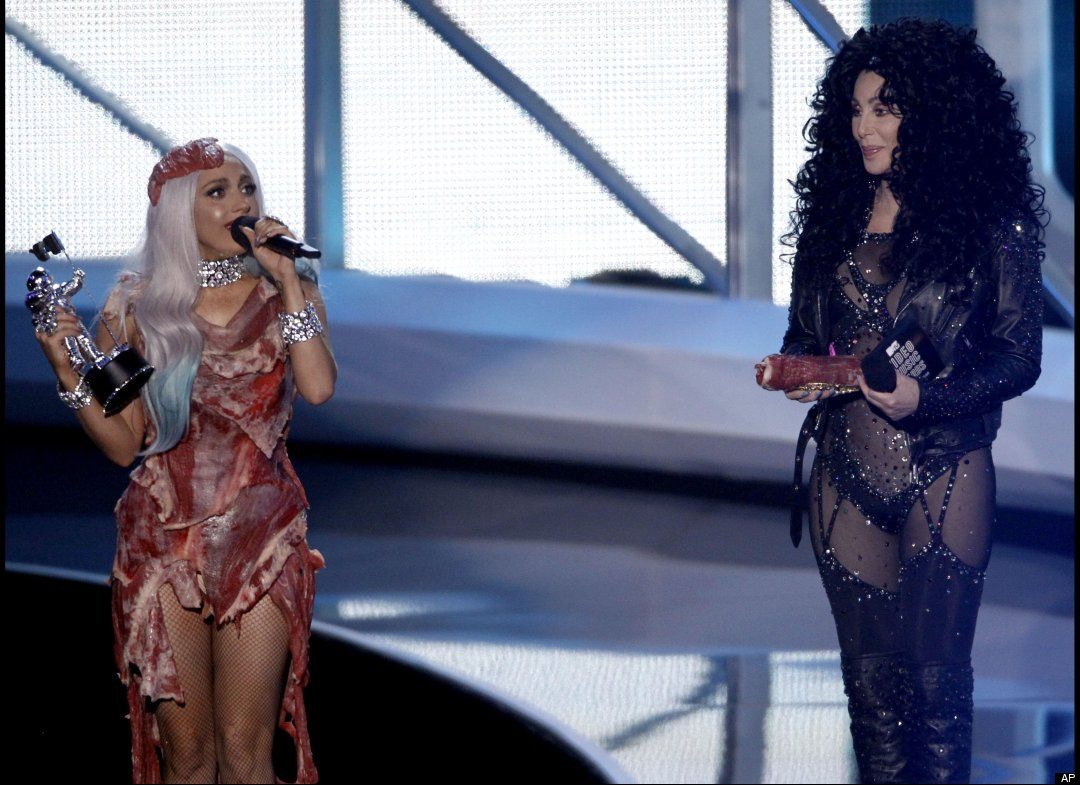
Cher and Lady Gaga in their most notorious outfits at the 2010 MTV Awards
Oscar Wilde, Irish poet, author and playwright, once remarked – The only thing worse than being talked about is not being talked about.  

The entertainment industry is an industry like any other, and thus the pressure is on celebrities to be more shocking, more outrageous, in order to increase ‘product awareness’ in the market.   

As Jenny notes in her post, Applying critical interpretations to Reality TV, marketers are taking advantage of the widespread appeal of ‘reality TV’ and adopting new ploys to reach a wider audience.The growing phenomenon of cross-promotional appearances has resulted in ‘reality TV’ shows, classified for family viewing, increasingly featuring scantily clad music artists gyrating suggestively, eagerly watched by a young and impressionable audience.  Inevitably, complaints ensue.  There is ‘public outrage’.  TV and music producers depend on it.  

One of the unfortunate side effects of ‘moral panics’ is that they frequently tend to ensure that ‘offensive’ material reaches an even larger audience, as this recent article in British newspaper The Daily Mail, demonstrates.  The article purports to be a serious news story about stricter broadcasting guidelines being implemented in Britain, following a large number of complaints about the ‘inappropriate’ costumes and choreography of guest performers on the X Factor’s final show of the season, aired in December 2010.  

However, as Brendan Behan, paraphrasing Wilde, succinctly states – There is no such thing as bad publicity.  The article manages to simultaneously adopt a tone of moral outrage while gratuitously including multiple “graphic” images of the offending performances, thereby providing the artists with the kind of coverage publicists dream about.  

While Thompson (2010, p397) argues that “sexualised behaviour is generally considered appropriate for adults (assuming it is expressed in socially acceptable ways)”, I question whether the sexualised behaviour exhibited in popular media would be considered ‘socially acceptable’ if displayed in other contexts or by adults other than celebrities.  


Images 
Cher and Lady Gaga. Retrieved from 

Madonna. Retrieved from  


References
Thomas, L. (2011) At last... Rihanna and Co told 'you'll have to cover up if you want to appear on X Factor', as Ofcom cracks down on the sexualisation of children. The Daily Mail. 1st October 2011. Retrieved from http://www.dailymail.co.uk/tvshowbiz/article-2043762/X-Factor-Acts-like-Rihanna-Christina-Aguilera-told-cover-Ofcom.html

Kirrilly Thompson (2010): Because looks can be deceiving: media alarm and the
sexualisation of childhood – do we know what we mean?, Journal of Gender Studies, 19:4, 395-400. http://dx.doi.org/10.1080/09589236.2010.533492


23 Oct 2011

The myth of innocence

In an earlier post, I presented a YouTube clip of very young girls performing a dance routine based on the Beyonce hit music video, Single Ladies. Thinking back on my observations, I wondered why I found the clip so disturbing.  A number of recent articles – The innocence fetish (Faulkner, 2010), Too much? too young?  (Lumby and Albury, 2010) and Troubling childhood innocence (Taylor, 2010) – provided me with some insight. 

One of the key points made by Faulkner (2010, p107) is that perceptions of children as sexual beings are determined by the adult gaze.  In other words, sexualisation is a result of viewer interpretation. It seems that not only beauty is in the eye of the beholder, so too is desire.  As Lumby and Albury (2010, p145)  point out, paedophiles can construe a “sexual invitation” in an image of a child regardless of what they are wearing. However, they state that most “reasonable adults [do not view] images of children” in this way (Lumby et. al., 2010, p145).

Yet Taylor (2010, p51) claims that many adults now are doing just that.  Attempts by well-meaning adults to protect children from the potential danger of unwanted sexual attention have created an atmosphere in which all images of children are evaluated from a paedophilic perspective (Taylor, 2010, p51).  Clearly, my own reaction to the YouTube clip has been influenced by the latest ‘moral panic’ concerning the loss of childhood innocence.  

While it may be true that childhood innocence is a social construct (Faulkner, 2010; Lumby et. al., 2010; Taylor, 2010), it is equally true that the moral codes that operate within society are also culturally constructed, and as such, they are subject to change over time; what was once unthinkable, becomes unmentionable, and is ultimately considered unavoidable.


Movie poster for the Baby Burlesks

Few would have considered the images presented by Shirley Temple and her cohort in the Baby Burlesks films to be sexually provocative; they were seen as harmless fun – cute kids playing ‘dress up’.   


Child star -Shirley Temple
 

Although hugely popular in the 1930s, it is unlikely in the current climate that they would even be made at all. 


Shirley Temple in War Babies (1932)  
 One of the major problems in the debate appears to be a reluctance on the part of many adults to recognise that children are in fact sexual beings (Taylor, 2010, p53).  While they might not be sexually mature, they still experience sexual curiosity, desire and pleasure (Taylor, 2010, p53).   Those at the forefront of the ‘moral panic’ have conjured up an alarming picture of hordes of ‘sexually depraved monsters’ ready to pounce on innocent, unsuspecting children if parents relax their guard for even an instant.  Children are seen as 'naturally' innocent. Consequently, a child expressing his or her innate sexuality is immediately presumed to be ‘prematurely sexually aware’.  

If evidence of child sexual abuse is not discovered, then the child’s ‘aberrant’ behaviour is often deemed to be a result of exposure to the ‘inappropriate’ sexualised images presented in popular media such as television.  This in turn results in calls from anxious adults, such as those which prompted the Senate Inquiry into the Sexualisation of Children in Contemporary Media (Standing Committee on Environment, Communications and the Arts, 2008) demanding governments ‘crack down’  on advertisers and broadcasters in order to protect children. 

However, despite widely held fears to the contrary, some researchers claim there is insufficient evidence to demonstrate that exposure to sexualised images actually “encourages [children] to act in adult sexual ways” (Buckingham & Bragg in Lumby et. al., 2010; Lumby et. al., 2010).  In fact, Buckingham and Bragg state that much of the sexual content encountered in popular media is misunderstood by children because they lack the background knowledge required to make meaning from the messages presented (2004 in Lumby et. al., 2010, p147).

Even though many adults would be relieved by this, Faulkner (2010, p107) argues that rather than protecting children, the attempt to perpetuate childhood innocence actually places children at greater risk of harm.  This is echoed by Lumby et. al., (2010, p149) who state “sexual ignorance” is not an effective defence against unsolicited sexual attention.  While much of the ‘moral panic’ focuses on the threat posed by anonymous paedophiles, the ‘stranger danger’ education does little to prepare children and young people to deal with unwanted sexual advances by known adults and peers.   

Kincheloe (2002 in Taylor, 2010, p55-56) points out that attempts by adults and educators to shield children from the ‘inappropriate’ influence of popular media have backfired. In the absence of respectful dialogue between adults and children about sexual issues, children are increasingly turning to popular culture for answers (Taylor, 2010, p56).  While many media producers are, to a degree, bound by industry standards and government imposed regulations, there may be disparity between what is considered acceptable by these agencies, and what is considered acceptable by prevailing cultural standards.   

Given that we live in a consumer-based society, it is unsurprising that manufacturers test the boundaries of what is considered acceptable in order to sell their goods to a wider and wider target audience.

Padded bras for pre-teens
  
Pole dancing doll


Hence, we see advertisements for padded bras designed for prepubescent girls and pole dancing dolls created to appeal to toddlers.


While such products tend to spark community outrage, it must be assumed there is a profitable market for these items; manufacturers habitually undertake considerable market research before committing to the expense of producing and distributing products.

Although this provides an ideal opportunity for parents and other educators to initiate open conversations about children’s “passage to adulthood”, many shy away from broaching the uncomfortable topic of sex, instead bemoaning the circumstances that force them to discuss ‘adult’ subjects with children (Faulkner, 2010, p115-116). Yet clearly, due to the pervasiveness of sexualised imagery in popular media, we cannot prevent children’s exposure to sexualised material. Thus, children may copy the clothing and behaviours of prominent adult figures such as popular media celebrities and be unaware of how they may be perceived by others. 

That being said, it is important for adults to understand that some young people may choose to express their emerging sexuality in ways that adults may consider unsuitable (Lumby et. al., 2010, p149).


Explicit message
Denigrating these outward expressions may actually inhibit the development of a healthy sexual self-image. Nonetheless, it is incumbent on adults to ensure that children are not exposed to age-inappropriate images of sexual relationships, or those that sanction sexually abusive or coercive behaviour (Lumby et. al., 2010, p149).

As stated earlier, visual messages are interpreted by the viewer, and are therefore also open to misinterpretation.  While we cannot control how visual messages are interpreted, it is important for young people’s sexual health and safety that adults and educators help them to develop an awareness of how they could be perceived, understand the possible consequences arising from that and assist them to develop strategies for dealing with risky situations.    


Images

Child star Shirley Temple – retrieved from Daniel, C.L.  (May 2001) Working Boys and Girls:  Using Children in the 1930's.  http://xroads.virginia.edu/~ma01/lundy/childsexual.html
Explicit messages – retrieved from www.truechild.org  http://www.truechild.org/Images/Interior/blog/good%20to%20go.jpg
Padded bras for pre teens – retrieved from www.miraculousladies.com http://www.miraculousladies.com/lifestyle/should-we-sexualise-our-young-daughters/
Pole dancing doll – retrieved from http://gizmodo.com  http://gizmodo.com/5348675/pole-dancer-doll-doesnt-really-set-the-perfect-role-model
Shirley Temple in War Babies (1932) – retrieved from http://denniscooper-theweaklings.blogspot.com/2007/09/kiddiepunk-presents.html

References

Faulkner J. (2010) The innocence fetish: The commodification and sexualisation of children in the media and popular culture. .[electronic version] Media International Australia, Incorporating Culture & Policy. 2010:106-117.  http://www.uq.edu.au/mia/index.html

Lumby C, Albury K. (2010) Too much?: Too young?: The sexualisation of children debate in Australia. [Electronic version] Media International Australia, Incorporating Culture & Policy. May. No 135:141-152.   http://www.uq.edu.au/mia/index.html
Standing Committee on Environment, Communications and the Arts. (2008). Report of the Senate Inquiry into the Sexualisation of Children in Contemporary Media. Canberra: Commonwealth of Australia. Retrieved from: http://www.aph.gov.au/senate/committee/eca_ctte/sexualisation_of_children/report/report.pdf
 . 
Taylor, A. (2010). Troubling childhood innocence: Reframing the debate over the media sexualisation of children. Australasian Journal of Early Childhood. 2010; 35. p48-57. http://www.earlychildhoodaustralia.org.au/australian_journal_of_early_childhood/australian_journal_of_early_childhood.html


18 Oct 2011

Silent and Sexy

A study published in USA Today shows the gender messages being sent to audiences through film today: women are seen but not heard, preferably adorned in sexy or no clothing and the younger the better (Hellmich, 2011).


The Annenberg School for Communication and Journalism at the University of Southern California analysed the 100 top-grossing movies of 2008 and came up with disturbing findings about the sexualisation of women and particularly teen girls in movies (Hellmich, 2011).


Here are some of the statistics about films revealed by the study:


  • men had two-thirds of the speaking roles;


  • 85 percent of film directors, writers and producers are male;


  • female characters are more likely to dress provocatively or appear partially naked.


Most disturbingly however, was the sexualisation of teenage female characters who were 40 percent more likely to appear provocatively dressed than older female characters and 30 percent more likely to appear partially naked.

Heading the most successful films in 2008 were Twilight, the Dark Knight and Iron Man. This poster is from “Step Up 2 the Streets” which ranked 53.


Researcher, Stacy Smith believes that the data reflects an “overemphasis on beauty, thinness and sexualisation of women at younger and younger ages” (as cited in Hellmich, 2011).


In his article in the Sunday Age in 2010, John Bailey claimed that anxiety surrounding the sexualisation of teenagers bears “all the hallmarks of moral panic” and wrote that it was “ironic” that recent pop culture films such as Twilight do not depict teenagers actually engaging in sex (Bailey, 2010).


I believe that Bailey is missing the point here. Anxiety about the sexualisation of young people, particularly girls, is much more than a fear of potential sexual promiscuity. It is about the potential harm that can occur to girls’ social, academic and career development if they become obsessed about whether their appearance conforms with the unrealistic standards of beauty and sexiness dictated by films and other forms of popular culture (Curry & Choate, 2010).


References


Bailey, J. (2010, July 4). No sex please, we’re teenagers. The Sunday Age. Retrieved from http://www.theage.com.au/entertainment/movies/no-sex-please-were-teenagers-20100703-zv3v.html


Box Office Mojo. (2011, October 17). 2008 Domestic grosses #1-100 [Web log post]. Retrieved from http://boxofficemojo.com/yearly/chart/?yr=2008


Curry, J. & Choate, L. (2010). The oversexualisation of young adolescent girls: Implications for middle grades educators. Middle School Journal 42(1), 6-14. Retrieved from http://gateway.library.qut.edu.au/login?url=http://search.proquest.com.ezp01.library.qut.edu.au/docview/760810993?accountid=13380


Hellmich, N. (2011, April 24). Film study: Men talk and women show skin. USA Today. Retrieved from http://www.usatoday.com/life/movies/2011-04-21-movies-men-women-roles-speaking-sexy.htm


Step up 2 the Streets. (2008). [Image]. Retrieved October 18, 2011 from http://www.imdb.com/title/tt1023481/


15 Oct 2011

Film, Television and Transforming Pedagogy

By Sue

As modern educators, teachers are not only responsible for traditional education – “the 3Rs” – but also to educate the students in topics of the 21st century.  These include media literacies. The internet and mobile media are important, however film and television, as two of the older media continue to be a vital part of most children’s lives.

My major focus in teaching and learning is that I believe learning should be an active process, with inquiry at the centre and the teacher as the facilitator of learning. I employ a constructivist approach to teaching and learning and believe in setting up a problem or a 'quest' and allowing students to construct their own knowledge by connecting from what they know to the new. I act as a facilitator in a majority of cases guiding the learning and allowing students to arrive at their own conclusions. As a social constructivist, I search for the Zone of Proximal Development - find where the students are at and therefore how they can be moved on. I act as a scaffold, providing support for students to achieve. I view learning as a collaborative and a social activity. I attempt to develop knowledge in authentic learning activities, which engage students in the kinds of problems and practices that are present outside of school. These practices must include media of all types as this is what students are using to acquire knowledge and develop socially at home. Therefore it is imperative that I use digital media in the learning context.

My above view of knowledge in the 21st century is supported in a variety of research and current curriculum documents. The Essential Learnings Position Paper (2007) states that knowledge itself has a undergone a transformation.
Knowledge exists in a range of forms, and a comprehensive curriculum will ensure a balance of the most important ones. A synthesis of knowledge typologies illustrates the range which needs to be represented in the curriculum 
(Essential Learnings and Standards Position Paper 2007, p5
My view of the use of digital media in general and film and television in particular is supported by the Melbourne Declaration on Educational Goals for young Australians where it is stated that although technologies are used in schools there is a need to increase the effectiveness of the use of such technologies over the next decade.  (Ministerial Council on Education, Employment, Training and Youth Affairs, 2008) Therefore with the above beliefs in mind it is necessary to approach the media literacies and in particular film and television in a very similar manner, that being not of a passive participant but rather a creator and critical viewer of media.  Jenkins’ White Paper supports this assertation.
“ We are moving away from a world in which some produce and many consume media,
toward one in which everyone has a more active stake in the culture that is produced”  (Jenkins, 2006 P 10)

The 3C’s – Connect, Create and Critical– discussed in the Lecture 11 (QUT, 2011) are an excellent way of allowing students to construct knowledge when using film and television. No longer is it acceptable to just put on a TV show for children to gain knowledge from. I do recall such TV shows as “For the Juniors” where perhaps, sometimes, I would tune in at 1.40pm after second break just to allow my Yr 2 students some down time after play. In that situation I lacked purpose. After many years of teaching this type of activity is no longer acceptable (if it was ever?) It is now necessary to use the medium to connect students to their past knowledge allowing them to construct new learning from it. We can then ensure new   learning is connected through student’s creating with this knowledge. Most importantly, developing the critical aspect of film and television viewing is essential. This view is also supported in the Literacy for the 21st Century Document where the process skills of media literacy are discussed as Access, Analyse, Evaluate and Create.  (Thoman, 2003)

The American Academy of Pediatrics recommends 1-2 hours of screen time per day.  (American Academy of Pediatrics, 2010). This includes film, television, computers, and mobile media. However realistically most children have up to 5 hours of screen time per day not including screen time at school.  So with screen – TV in particular such a major aspect of children’s lives, it is vital that children develop critical media literacy skills. With many children using TV as a background noise in their bedrooms and perhaps just watching to chill out, they may take all that is on ‘the box’ at face value. It is vital for educators to be modelling and practicing the critical viewing of television and movies targeting in particular, the moral panics, gender and ethnicity stereotyping and the sexualisation of children and women. Using TV in education is not just about the what, but rather the how. It is a time when the substantive conversations about important moral issues can take place.  In traditional literacies, teachers constantly discuss comprehension techniques – predicting, questioning, clarifying and synthesising. I consistently apply these known strategies to any film and television viewing. The connections between what is watched and what is read are established.  Television is used not just to support learning – or as a resource, but rather the use of TV and movies is the learning. This targeted use of film and TV resources ensures that, the use of film and television in schools does not become a moral panic in itself. In my community the use of a movie in learning is very rarely seen as an authentic medium – rather parents view this medium as down time and ‘fun’ for the students. This is a view that with publicity is gradually changing.

 I believe digital media is a most powerful medium for providing the optimal opportunity for transformative learning to take place and for students to construct knowledge. It is vital not to simply equip them with knowledge but rather with the skills and processes to access any knowledge they may need in order to achieve success. The appropriate use of film and television in schools assists in transforming learning, developing 21st century skills that will allow students to be productive citizens. Thus film and Television continue to be viable education resources in my setting.

References

American Academy of Pediatrics. (2010). Policy Statement - Media Education. Official Journal of the American Academy of Pediatrics, 1-8.
Australian Curriculum, Assessment and Reporting Authority. (2011, March). Guide to understanding ICSEA. Retrieved April 5, 2011, from My School: http://www.acara.edu.au/verve/_resources/Guide_to_understanding_ICSEA.pdf
Brown, J. (2002). Retrieved October 14, 2011, from Growing Up Digital: How the web changes work, education and the ways people learn.: http://www.usdla.org/html/journal/FEB02_Issue/article01.html
Jenkins, H. C. (2006, August). Confronting the Challenges of Particpatory Culture: Media Education for the 21st Century. . Retrieved October 14, 2011, from http://digitallearning.macfound.org/site/apps/nlnet/content2.aspx?c=enJLKQNlFiG&b=2108773&ct=3017973&notoc=1
Ministerial Council on Education, Employment, Training and Youth Affairs. (2008). Melbourne Declaration on Educational Goals for Young Australians. Retrieved April 4, 2011, from MCEEDYA: http://www.mceetya.edu.au/mceecdya/melbourne_declaration,25979.html
Queensland Studies Authority. (2007). Essential Learnings Position Paper. Retrieved March 30, 2011, from Queensland Studies Authority: http://www.qsa.qld.edu.au/downloads/early_middle/qcar_el_position_paper.pdf
QUT. (2011). Youth, Popular Culture and Texts Blackboard Site - Week 11. Retrieved October 11, 2011, from Youth, Popular Culture and Texts: http://blackboard.qut.edu.au/webapps/portal/frameset.jsp?tab_tab_group_id=_2_1&url=%2Fwebapps%2Fblackboard%2Fexecute%2Flauncher%3Ftype%3DCourse%26id%3D_75617_1%26url%3D
Thoman, E. (2003). Literacy for the 21st Century. London: Center for Media Literacy.

6 Oct 2011

TV Villans: Moral Panics

TV Villans: Moral Panics

As a long serving teacher I often advocate the use of both film and television in teaching and learning. Unfortunately when using TV in particular I often have to justify why I use this particular medium “Isn’t a book good enough” TV’s bad for children – they’ll get square eyes. They should be outside being active not inside watching TV!” Sound familiar?

TV Villans: Media Panics is a highly relevant and amusing book chapter from the book Why TV is Good for KidsRaising 21 century children by Catharine Lumby and Duncan Fine. The chapter deals with several current aspects of television. The aspect of moral (media) panics are managed in an exceptionally well form from the first pages.
“…rational concerns is one thing, blind fear and unthinking prejudiced is another” (Lumby and Fine, 2006, P56)

The chapter focuses on two moral panics around children and TV. The first moral panic asserts that television makes children intellectually passive and the second is that TV makes children physically lazy and thus obese. This blog will discuss these aspects as viewed by Lumby and Fine and include relevant evidence to support the discussion. As a concluding point I will broach the fact of TV not only being the victim of moral panic but also the instigator of many moral panics.

The book chapter deals with several aspects of TV and its many detractors.  It seems that despite TV being the most long standing and highly censored modern medium it still has a volume of detractors.  The common view is that in modern media, the internet is vital for children but TV is still seen as senseless entertainment and a corruption to children’s physical and mental well-being.

One of the most interesting aspects of the chapter was the discussion around the Teletubbies. As a parent of a 1997 born child, I distinctly remember the controversy of the Teletubbies being encoded with symbolism that promoted drug inspired behaviour (Lumby & Fine, 2006.) One of my other clearest memories of the time was the Tinky Winky Gay Debate in 1999.

In 2011, TV programming continues to be a target for various campaigners attempting to use children’s television to forward their own agenda. Recently Sesame Street’s Bert and Ernie has been the focus, with the Lair Scott petition to marry Ernie and Bert, in order to forward the Gay marriage agenda. News.com.au also reported on the fact that a transgender character has been requested to be added in the online petition and Facebook page.

The above campaigns, which may be viewed as morally reprehensible, actively dispute the first moral panic of the chapter that TV makes children intellectually passive. If these activists are trying to influence children through messages on television it stands to reason that children are not regarded as passive viewers.  If intellectual messages such as the gay marriage debate are presented on children’s television then obviously TV is seen as a medium that promotes high level thoughts in children - a message that has been recognised by advertisers for many years. These ideals in turn point to the facts that modern society continually turn to TV to deliver appropriate social messages to our children.

And yet the TV bashers are quite sure that TV is injuring our children and “ it’s a device used by Bad Parents to avoid their responsibility to their children”.  (Lumby & Fine, 2006, P68)

David Buckingham’s studies have shown that rather being passive viewers, even very young viewers of TV actively engage with TV programs and use them to create their own stories and develop modern literacy skills. His book - Children Talking Television – The making of Television Literacy (Buckingham, D., 1993) discusses how children actively make meaning and take pleasure from television particularly in the context of small group talk. (Buckingham, 1993).Children are even seen to recognise the relationships between special effects and product codes, which are several of the important Digital Media Literacies.

Jackie Marsh in the Digital Beginnings Report actively discounted the myth that children are passive, sitting TV viewers. In her interviews only 5% of children sat quietly and concentrated on TV all of the time. Activities ranged from Singing (77%), Dancing (73%) to Conversation (48%). Ask any parent who is trying to watch a TV program with any 3 year old just how quietly they really sit!

The second aspect of TV in this book chapter is focussed on TV, laziness and obesity in children. This myth is thoroughly discounted as being part of a “media-driven obesity panic (Lumby & Fine, 2006, P76.)

Which then brings us to the point of television and television media in particular being the instigators of moral panics around children and teenagers. Stanley Cohen described this happening in the UK after the series of mild clashes between the Mods and the Rockers. In Australia in 2008 the “Corey Delaney” party was one media event that outraged the upstanding citizens of Australia as the event where “harm included the throwing of glass and bricks, the breaking of letterboxes, the shouting of obscenities, as well as drunkenness and damage to police cars.”
The original story was valid. The ensuing media panic about drunken teenagers and bad parenting was a great example of television creating a moral outrage over an isolated event.  With free to air television such as A Current Affair, Current Affair Follow Up, and Big Brother  involved, a teenagers party rapidly escalated into the well-known event it is today. The further involvement of You Tube to spread the television interviews created the moral outrage.  And so television is not the “root of all evil”, as demonstrated in the book chapter and this discussion. Television is beneficial to children when used as part of a balanced life. But not all on TV and especially the TV news needs to be taken at face value. I like to be conscious of the joys of TV and the pleasure and education I have gained from watching and interacting with it. As adults, parents and educators we all need to be remember this at times.

 “reaching adulthood means you acquire selective memory and you start to view the past through a set of very rosy-coloured lens (Brooks, 2008 P 4)


REFERENCES
69anatole69 . (2007, October). Teletubbies. Retrieved September 20, 2011, from YouTube: http://www.youtube.com/watch?v=3ichQOqbewA
ABC News. (2008 , January 15). Police not amused after huge rowdy party. Retrieved September 20, 2011, from ABC News: http://www.abc.net.au/news/2008-01-14/police-not-amused-after-huge-rowdy-teen-party/1012474
BBC. (1999, February 19). BBC News: Tinky Winky Bad for Children. Retrieved September 22, 2011, from BBC : http://news.bbc.co.uk/2/hi/276677.stm
Break.com. (2008, January 17). Australian Party Boy Corey back on TV. Retrieved Spetember 22, 2011, from Break.Com: http://www.break.com/usercontent/2008/1/Australian-Party-Boy-Corey-back-on-TV-434820
Brooks, K. (2010). Consuming Innocence: Popular Culture and our Children. Brisbane: University of Queensland.
Buckingham, D. (1993). Children Talking Television; The Making of Televsion Literacy. London: Falmer press.
Facebook. (2011). Bert and Ernie Get Married. Retrieved September 22, 2011, from Facebook: http://www.facebook.com/BertAndErnieMarriage
Institute of Education: University of London. (2011). Professor David Buckingham. Retrieved September 20, 2011, from Institute of Education: University of London: http://www.ioe.ac.uk/study/LKLB_7.html
Lumby, C. F. (2006). TV Villians: Media Panic. In C. F. Lumby, Why TV is good for kids: Raising 21st century children (pp. 55-96). Sydney: MacMillian.
Marsh, J. (2005). Digital Beginnings Report. Sheffield: Literacy research Centre: University of Sheffield.
News Limited. (2011, August 11). Bert and Ernie told to get married. Retrieved September 21, 2011, from News.com.au: http://www.news.com.au/entertainment/television/sesame-streets-bert-and-ernie-told-to-get-married/story-e6frfmyi-1226112791054
Nine Australia ACA. (2008, January 15). Nine Australia - ACA - Corey Delaney Party Kid Round 1 . Retrieved September 20, 2011, from YouTube: http://www.youtube.com/watch?v=3-2pVsKRNX8
reid1111111111111111. (2006, January 20). Bert and Ernie: Cookies in Bed. Retrieved September 21, 2011, from YouTube: http://www.youtube.com/watch?v=YpozspIMH9E
Scott, L. (2011, May). Let Bert and Ernie get married on Seseme Street. Retrieved September 21, 2011, from Change.org: http://www.change.org/petitions/let-bert-ernie-get-married-on-sesame-street
Socceroo49. (2008, May 5). Corey Delaney . Retrieved September 23, 2011, from YouTube: http://www.youtube.com/watch?v=VwLDSF6Yq54

Sue

5 Oct 2011


Who is Riding this
Moral High-horse?

by Jenny

Recently, the Courier Mail ran a story in its Federal Parliament news section.

I personally took a double take of the photo. It wasn’t, on closer examination, our Prime Minister sans clothes straddling a male, but her TV  look-alike Amanda Bishop.

Similar reports appeared across the nation, in the print media, declaring a “national outcry” due to the lack of respect (Devine, 2011). Was there really such moral panic? Was it a free plug for an ABC comedy? According to The Daily Telegraph, the show rated highly. Even the Prime Minister was planning to watch (she clearly wasn’t bothering to ride the ‘moral high-horse’)!

Interesting is the blasting the ABC satire At Home With Julia received from MPs from both sides. I suppose they were riding their ‘moral high-horses’...

Anne Caldwell reported it would air that evening - regardless of “calls for the show to be axed”…

Leading the charge was John Forrest MP who described the scene as “sick” (Caldwell, 2011).

So what was the fuss about???


While having sex,
in the P.M.’s office...

... along with the possible “targeting” of Ms Gillard’s gender writes Ms Caldwell (2011).

Two separate issues!

One, intertwined with respect:

Set protocols surrounding the use of our flag exist. Therefore, it is understandable that this would make some viewers see red – as the parents of fallen soldiers did.

The flipside is the lack of respect toward our Prime Minister.
Really???

With calls for investigating ABC funding by some sick of being offended; others simply say if you feel that way – turn the show off!
Bronwyn Bishop reminded other Liberals of political satires John Howard copped…

Political satires are nothing new. Undoubtedly the moral panic surrounding them are no different! They’ve appeared in film and on television for years, and not just in Australia.
[Blogger Neerav Bhatt notes his favourites claiming they’re “equal opportunity offenders… revealing their (individual’s and organisation’s) hypocrisy and stupidity while also informing and entertaining their audience”] (Bhatt, 2008).

So whilst politicians behave as they do, within (and out of) the public forum, they’ll always provide meaty subject-matter for satirists. And it’ll always get up someone’s nose, perhaps enough to bridle the ‘moral high-horse’.

That’s for certain!  


References


ABC. (2011). At Home With Julia. ABC Television,  Retrieved October, 7, 2011, from http://www.abc.net.au/tv/programs/athomewithjulia.htm
Australian Government. (2009). Australian political cartooning - a rich tradition. Australia.gov.au  Retrieved October 7, 2011, from http://australia.gov.au/about-australia/australian-story/austn-political-cartooning
Australian Government. (2010). It's an Honour: Symbols: Australian National Flag. It's an honour: Australia celebrating Australians  Retrieved October, 7, 2011, from http://www.itsanhonour.gov.au/about.cfm
Bhatt, N. (2008). The Best Satirical Comedy from Australia and America. Rambling Thoughts Blog  Retrieved 7 October, 2011, from http://www.bhatt.id.au/blog/the-best-satirical-comedy-from-australia-and-america/
Caldwell, A. (2011, September 21). Sex scene flags support for Gillard. The Courier-Mail.
Devine, M. (2011). ABC crosses the boundary with sitcom At Home with Julia  Perth Now  Retrieved October, 7, 2011, from http://www.perthnow.com.au/abc-crosses-the-boundary-with-sitcom-at-home-with-julia/story-fn6mhct1-1226143777928
Microsoft. (2011). Gillard TV sex scene airs on MSN Video. ninemsn.video  Retrieved October, 7, 2011, from http://video.au.msn.com/watch/video/gillard-tv-sex-scene-airs/xcbmrew?cpkey=06c5c401-8164-4b44-abe1-107dbda9f1ed%7C%7C%7C%7C

National Film and Sound Archive. (2006-2011). Edmund Barton and the Velvet Soap Advertisement: Australian Studies, White Australia Policy. National Film and Sound Archive  Retrieved October, 7, 2011, from http://dl.nfsa.gov.au/module/1100/
News Limited. (2011). Sitcom disgusts soldiers' families Adelaidenow.com  Retrieved October, 7, 2011, from http://www.adelaidenow.com.au/news/national/sitcom-disgusts-soldiers-families/story-e6frea8c-1226143143761
news.com.au. (2011a). Sex scene flags support for Gillard: Related Articles. News  Retrieved October, 7, 2011, from http://search.news.com.au/related/id%3Astory_1226142091423/0/Sex-scene-flags-support-for-Gillard/?us=ndmnews&sid=2&as=news&ac=travel&r=related
news.com.au. (2011b). Video: Gillard on that naked flag scene. News  Retrieved October, 7, 2011, from http://video.news.com.au/2137577147/Gillard-on-that-naked-flag-scene
The Daily Telegraph. (2011). At Home With Julia spoof draws ire over Aussie flag sex scene The Telegraph.com.au  Retrieved October, 7, 2011, from http://www.dailytelegraph.com.au/news/at-home-with-julia-spoof-draws-ire-over-flag/story-e6freuy9-1226141206678
The Punch Team. (2011). Gillardflagmain.jpg. The Punch  Retrieved October, 7, 2011, from http://www.thepunch.com.au/images/uploads/Gillardflagmain.jpg
Wikipedia®. (2010). Category:Political satire films. Wikipedia, the free encyclopedia  Retrieved October, 7, 2010, from http://en.wikipedia.org/wiki/Category:Political_satire_films
Wikipedia®. (2011a). Amanda Bishop. Wikipedia, the free encyclopedia  Retrieved October, 7, 2011, from http://en.wikipedia.org/wiki/Amanda_Bishop
Wikipedia®. (2011b). Category:Satirical television programmes. Wikipedia, the free encyclopedia  Retrieved October, 7, 2011, from http://en.wikipedia.org/wiki/Category:Satirical_television_programmes
Wikipedia®. (2011c). Gender role Wikipedia, the free encyclopedia  Retrieved October, 7, 2011, from http://en.wikipedia.org/wiki/Gender_role
Wikipedia®. (2011d). Moral panic. Wikipedia, the free encyclopedia  Retrieved October, 7, 2011, from http://en.wikipedia.org/wiki/Moral_panic
Wikipedia®. (2011e). Repect. Wikipedia, the free encyclopedia  Retrieved October, 7, 2011, from http://en.wikipedia.org/wiki/Respect